India Investment For Global Investors

The Indian diaspora and global HNIs / UHNIs, NRI, SMSF, Investment company & Trust, Money manager, Asset manager, Financial planners, Fund Manager, Portfolio Managers, Superannuation funds, Alternative Assets and Hedge Funds are actively looking to participate in the India growth story.

We offer a variety of investment solutions for global investors looking to invest in India; through GIFT city. Our investment structure provides opportunity and access to Indian public markets, which is a vibrant avenue for investors seeking exposure to emerging markets. Our offering is only for eligible wholesale investors.

Investing in Mutual Funds

Beyond Stocks: Why Mutual Funds Are Often the First Step Into India's Investment Story

When people first think about investing, the image is often the same - screens filled with stock prices moving up and down every second. For many beginners, it can seem like a world that requires perfect timing, deep expertise, and constant monitoring. But investing does not always begin with selecting individual stocks. Sometimes, the smarter first step is allowing professionals to build and manage a portfolio while investors focus on the bigger picture. That is where mutual funds enter the conversation. As India's capital markets continue to attract growing attention from investors globally, understanding how mutual funds work provides useful insight into how investments are structured and managed in one of the world's evolving financial ecosystems.

What Exactly Is a Mutual Fund?

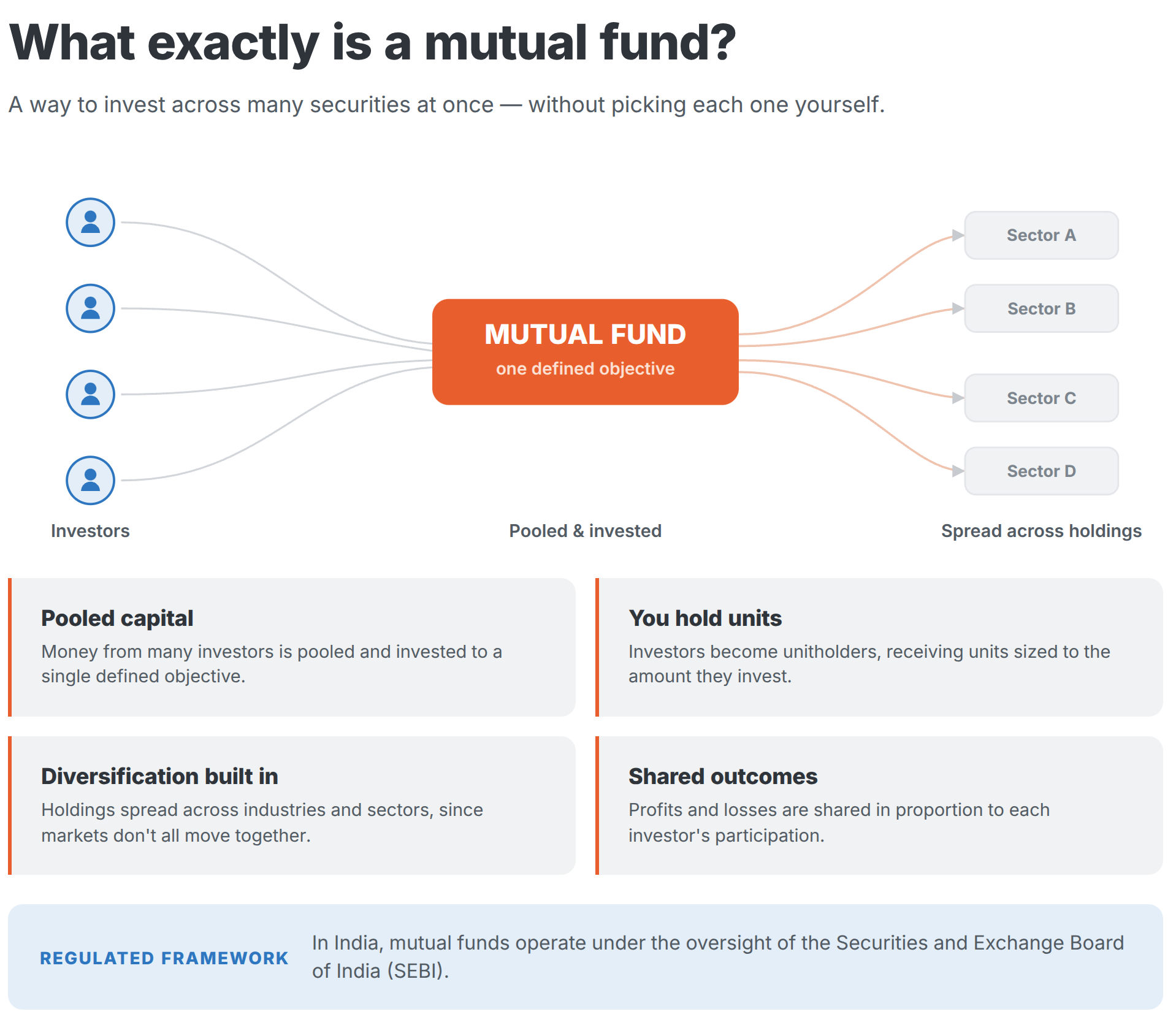
Imagine investing without having to pick individual stocks yourself. A mutual fund makes this possible by pooling money from multiple investors and investing it across different securities based on a defined objective.

In return, investors receive units based on the amount invested and become unitholders of the fund. Since investments are spread across different industries and sectors, risk is reduced through diversification - because not all markets move in the same direction at the same time.

Any profits or losses are shared among investors according to their participation. In India, mutual funds operate under the oversight of the Securities and Exchange Board of India (SEBI), ensuring a regulated investment framework.

The Evolution of Mutual Funds in India and the Role of SEBI

India's mutual fund journey began in 1963 with the launch of the first mutual fund, gradually expanding in the early 1990s as banks and financial institutions entered the space. A major milestone came in 1992 with the establishment of the Securities and Exchange Board of India (SEBI), created to protect investors and regulate the securities market.

Since then, SEBI has played a central role in shaping the mutual fund industry by introducing regulations, setting policies, and ensuring transparency. Whether a fund is promoted by public, private, or foreign entities, all operate under the same regulatory framework and oversight standards, creating a structured and consistent environment for investors.

Behind Every Mutual Fund Is a Structure Working Quietly in the Background

Behind every mutual fund is a carefully designed structure built to protect investors. A mutual fund is typically established as a trust involving key participants: a sponsor, trustees, an Asset Management Company (AMC), and a custodian.

While the AMC manages investments, trustees oversee operations and ensure that regulations and investor interests remain protected. Custodians are responsible for safely holding the fund's securities, creating an additional layer of oversight.

In India, all mutual funds are required to register with the Securities and Exchange Board of India (SEBI), with regulations also requiring independent representation within governance structures to strengthen transparency and accountability.

For international investors, governance frameworks often matter as much as investment opportunities themselves. Similarly, IG Funds' AFSL-compliant, AUD-denominated structure with an independent trustee and registry reflects the importance of oversight and investor confidence in cross-border investing.

Understanding NAV: Looking Beyond the Number

One of the first terms investors encounter in mutual funds is Net Asset Value (NAV). Simply put, NAV represents the value of a fund per unit and reflects the market value of the securities held within the scheme. Since market prices change regularly, NAV also moves over time and is disclosed periodically depending on the type of fund.

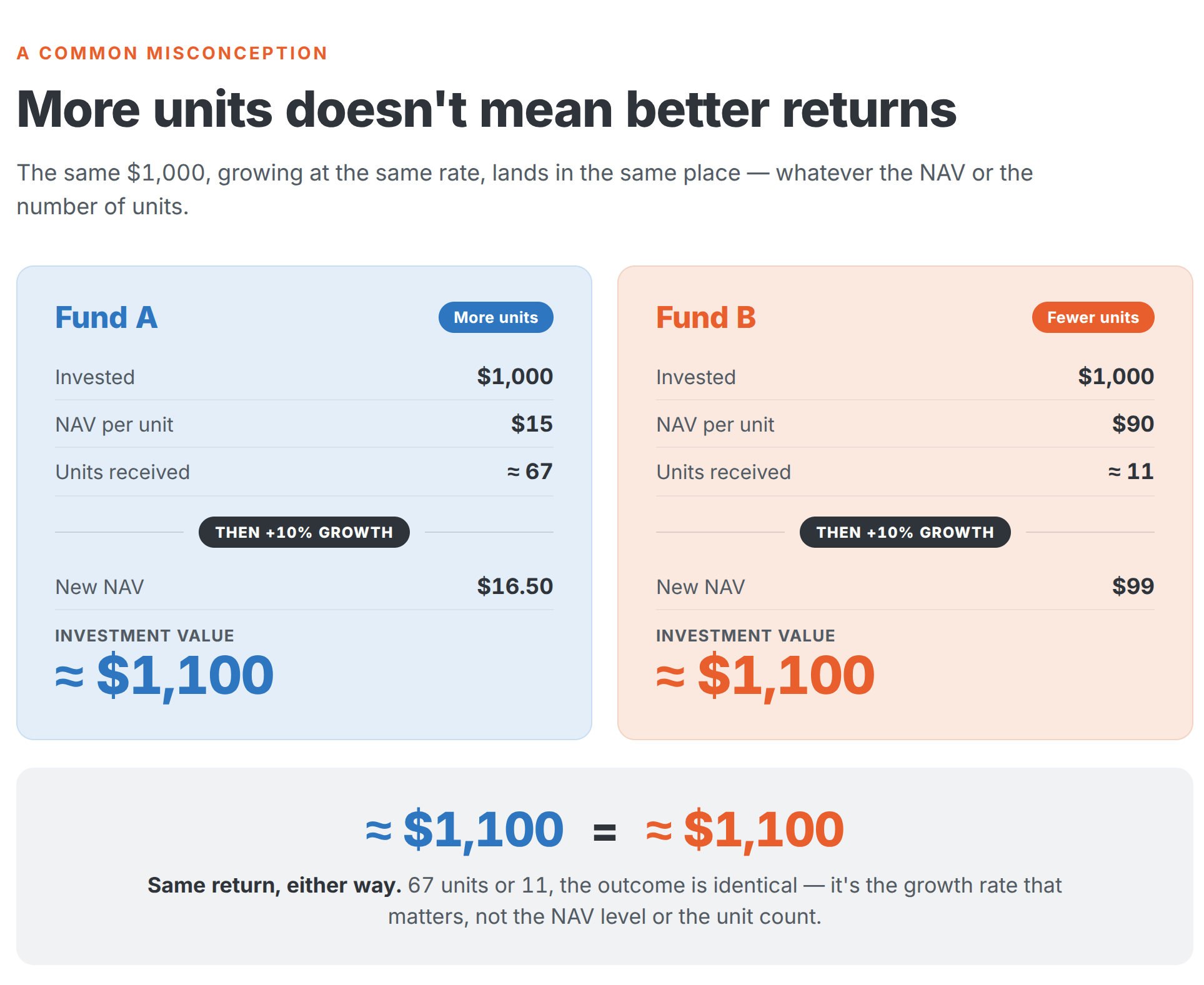
But here is where many investors get it wrong: a lower NAV does not automatically mean a better investment opportunity.

The takeaway is simple: investors should not confuse more units with more value. Factors such as fund performance, professional management, and investment strategy often matter far more than whether a scheme starts with a higher or lower NAV. For investors, the question should not be "How low is the NAV?" but rather "How well is the fund managed?"

Different Types of Mutual Fund Schemes

Not all mutual funds are built with the same purpose. Some are designed for flexibility, some for long-term growth, and others for stability or income. Choosing the right fund often begins with understanding what role it is meant to play.

Based on Maturity Period

1. Open-Ended Funds

Think of these as funds with an open door. Investors can enter or exit at any time by buying or redeeming units at the prevailing NAV. Their biggest advantage is liquidity and flexibility.

2. Close-Ended Funds

These funds operate with a fixed investment period. Investors usually enter during the initial launch period and can later trade units through stock exchanges or other available exit options.

Based on Investment Objective

1. Growth or Equity Funds

Designed for investors seeking long-term capital appreciation, these funds invest primarily in equities and generally carry higher risk with potentially higher returns.

2. Income or Debt Funds

Focused on generating relatively stable income, these funds invest in fixed-income securities and are generally considered less volatile than equity-oriented funds.

3. Balanced Funds

Balanced funds combine equity and debt investments, aiming to offer a mix of growth potential and regular income with moderate risk.

4. Money Market or Liquid Funds

Built for short-term needs, these funds invest in safer instruments and focus on liquidity, capital preservation, and modest returns.

5. Gilt Funds

These funds invest exclusively in government securities, which carry no default risk, although returns may still fluctuate with changes in interest rates.

6. Index Funds

Rather than actively selecting investments, index funds mirror a market index and aim to replicate its performance, with returns generally moving in line with the underlying index.


Sector-Specific Funds and Measuring Performance

Imagine choosing to invest only in one story rather than the entire market. Sector-specific funds follow this approach by focusing exclusively on particular industries such as healthcare, technology, consumer goods, or energy.

Because these funds concentrate on a single sector, their performance largely depends on how that industry performs. While they may offer stronger return potential, they also carry higher risk compared to diversified funds. Success often depends not only on selecting the right sector but also on timing it well.

But choosing a fund is only one part of the journey — understanding how it performs is equally important.

A mutual fund's performance is reflected through its NAV, which changes with market movements and is disclosed regularly. Investors also look beyond NAV and evaluate factors such as returns over different periods, expense ratios, annual reports, and independent research studies. Comparing a fund with similar schemes and relevant market benchmarks can often provide a clearer picture of performance and help investors make more informed decisions about when to enter or exit an investment.

Why Mutual Funds Continue to Appeal to Investors

Mutual funds are often valued not just for returns, but for the balance they bring between opportunity and convenience. Instead of relying on a single stock or constant market tracking, investors gain access to professionally managed portfolios built around specific objectives.

One of their biggest advantages is diversification. By spreading investments across multiple companies and sectors, mutual funds help reduce concentration risk that often comes with direct stock investing.

They also simplify the investment journey. Rather than continuously researching markets and monitoring individual securities, investors benefit from experienced fund managers making decisions on their behalf.

Accessibility and liquidity add to their appeal. Investors can begin with smaller amounts and gradually increase investments over time, while many schemes also offer flexibility to redeem investments when needed.

Even if a mutual fund scheme is wound up, investor interests remain protected. Unitholders receive payouts based on the prevailing NAV after applicable adjustments and are provided with complete details of the process.

Different Types of Mutual Funds: Choosing Based on Purpose and Risk

Not every mutual fund is designed for the same investor. Some focus on growth, others on stability, while some aim to balance both. Understanding the investment objective and risk profile often matters more than simply selecting a fund category.

1. Equity Funds

Primarily invest in stocks and equity-related instruments with the goal of long-term growth. These funds generally carry higher risk but also offer stronger return potential.

2. Debt Funds

Invest in fixed-income instruments such as bonds, government securities, and treasury instruments. They are generally considered lower risk and focus on generating relatively stable income.

3. Balanced or Hybrid Funds

These funds combine equity and debt investments, creating a middle ground for investors seeking both growth potential and stability.

4. Index Funds

Rather than actively selecting investments, index funds track a market index and aim to replicate its performance.

5. Exchange Traded Funds (ETFs)

ETFs trade on stock exchanges and may track indices, sectors, commodities, or bonds. Risk levels generally vary depending on the underlying assets.

6. Fund of Funds (FoFs)

Instead of investing directly in securities, these funds invest in other mutual funds, with risk levels depending on the underlying portfolio.

Frequently Asked Questions (FAQs)

Q1. What is a mutual fund in simple terms?

A mutual fund is an investment vehicle where money from multiple investors is pooled together and professionally managed across assets such as stocks, bonds, or other securities based on a specific objective.

Q2. Are mutual funds suitable for beginners?

Mutual funds are often considered beginner-friendly because they provide diversification and professional management, compared to directly selecting individual stocks.

Q3. Can investors lose money in mutual funds?

Yes. Since mutual fund returns are linked to market performance, values can fluctuate and short-term losses are possible.

Q4. How can someone start investing in mutual funds?

Investments can typically be made through banks, fund management companies, or investment platforms depending on the market and region.

Q5. What is the minimum amount required to invest?

One of the advantages of mutual funds is accessibility — investors can often begin with relatively small amounts and gradually increase investments over time.